2014
|
Putzer, M.; Rasmussen, J.; Ehrlich, I.; Gebbeken, N.; Dendorfer, S. Muskuloskelettale Simulation zur Untersuchung des Einflusses geometrischer Parameter der Wirbelkörper auf die Belastung der Lendenwirbelsäule. Leichtbau Forschungsbericht Ostbayerische Hochschule Regensburg inixmedia GmbH Marketing & Medienberatung, Forschungsbericht 2013, 2014. @techreport{Putzer2014,
title = {Muskuloskelettale Simulation zur Untersuchung des Einflusses geometrischer Parameter der Wirbelkörper auf die Belastung der Lendenwirbelsäule.},
author = {M. Putzer and J. Rasmussen and I. Ehrlich and N. Gebbeken and S. Dendorfer},
editor = {Ostbayerische Technische Hochschule},
year = {2014},
date = {2014-01-01},
address = {inixmedia GmbH Marketing & Medienberatung},
institution = {Ostbayerische Hochschule Regensburg},
abstract = {Zur Simulation von patientenspezifischen Belastungen in der Lendenwirbelsäule werden muskuloskelettale Modelle mit patientenspezifischer Geometrie verwendet. Diese Daten besitzen allerdings eine inhärente Ungenauigkeit. Diese Studie untersuchte den Einfluss definierter geometrischer Parameter auf die Lasten in der Lendenwirbelsäule anhand eines parametri-sierten muskuloskelettalen Modells in vier verschiedenen Körperhaltungen: aufrecht stehend, vorgebeugt, zur Seite gedreht und zur Seite geneigt. Variiert wurden die Abmessungen des Wirbelkörpers, des Wirbelbogens und der Dornfortsätze sowie die Orientierung der Facettengelenke und die Krümmung der Lendenwirbelsäule. Anschließend wurden die Parameter mit den größten Einflüssen in weiteren Simulationen kombiniert. Die Änderung der Last zwischen L4 und L5 wurde als Ziel der Untersuchung festgelegt. Die größten Lastunterschiede ergaben sich durch die Änderung der Wirbelkörperhöhe, der Band-scheibenhöhe, der Wirbelkörpertiefe und der Krümmung der Lendenwirbelsäule.},
type = {Forschungsbericht 2013},
keywords = {},
pubstate = {published},
tppubtype = {techreport}
}
Zur Simulation von patientenspezifischen Belastungen in der Lendenwirbelsäule werden muskuloskelettale Modelle mit patientenspezifischer Geometrie verwendet. Diese Daten besitzen allerdings eine inhärente Ungenauigkeit. Diese Studie untersuchte den Einfluss definierter geometrischer Parameter auf die Lasten in der Lendenwirbelsäule anhand eines parametri-sierten muskuloskelettalen Modells in vier verschiedenen Körperhaltungen: aufrecht stehend, vorgebeugt, zur Seite gedreht und zur Seite geneigt. Variiert wurden die Abmessungen des Wirbelkörpers, des Wirbelbogens und der Dornfortsätze sowie die Orientierung der Facettengelenke und die Krümmung der Lendenwirbelsäule. Anschließend wurden die Parameter mit den größten Einflüssen in weiteren Simulationen kombiniert. Die Änderung der Last zwischen L4 und L5 wurde als Ziel der Untersuchung festgelegt. Die größten Lastunterschiede ergaben sich durch die Änderung der Wirbelkörperhöhe, der Band-scheibenhöhe, der Wirbelkörpertiefe und der Krümmung der Lendenwirbelsäule. |
Eisenried, M.; Romano, M.; Jungbauer, B.; Ehrlich, I.; Gebbeken, N. Herstellung von unidirektional verstärkten Prepregs im Labormaßstab – Einfluss von Fertigungsparametern auf die Materialqualität. Leichtbau Forschungsbericht Ostbayerische Hochschule Regensburg inixmedia GmbH Marketing & Medienberatung, Forschungsbericht 2013, 2014. @techreport{Eisenried2014,
title = {Herstellung von unidirektional verstärkten Prepregs im Labormaßstab – Einfluss von Fertigungsparametern auf die Materialqualität.},
author = {M. Eisenried and M. Romano and B. Jungbauer and I. Ehrlich and N. Gebbeken},
editor = {Ostbayerische Technische Hochschule},
year = {2014},
date = {2014-01-01},
address = {inixmedia GmbH Marketing & Medienberatung},
institution = {Ostbayerische Hochschule Regensburg},
abstract = {A prepreg production device in laboratory scale is used to develop the production process of unidirectionally reinforced prepregs. The aim of the prepreg production machine is to impregnate different types of reinforcement fibers with an arbitrarily selectable thermoset matrix system that completely satisfies the requirements for autoclave processing. To identify the parameters of the production process and investigate its sensitivity on the quality of the semi-finished product, experimental investigations regarding fiber volume content and resin flow while curing are carried out with specimens out of test panels cured in autoclave processing. The investigated parameter is the width of the wiping gap and its effects on fiber volume content and resin flow. The parameter clearly affects both properties so that a proper impregnation and curing process can be achieved by optimizing the parameter to desired values.},
type = {Forschungsbericht 2013},
keywords = {},
pubstate = {published},
tppubtype = {techreport}
}
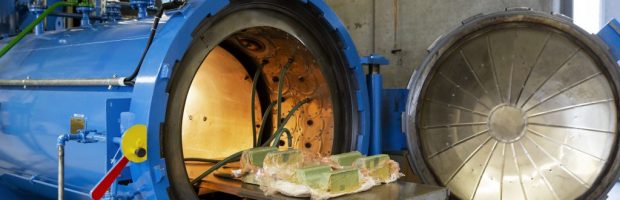
A prepreg production device in laboratory scale is used to develop the production process of unidirectionally reinforced prepregs. The aim of the prepreg production machine is to impregnate different types of reinforcement fibers with an arbitrarily selectable thermoset matrix system that completely satisfies the requirements for autoclave processing. To identify the parameters of the production process and investigate its sensitivity on the quality of the semi-finished product, experimental investigations regarding fiber volume content and resin flow while curing are carried out with specimens out of test panels cured in autoclave processing. The investigated parameter is the width of the wiping gap and its effects on fiber volume content and resin flow. The parameter clearly affects both properties so that a proper impregnation and curing process can be achieved by optimizing the parameter to desired values. |
Valentino, P.; Romano, M.; Ehrlich, I.; Furgiuele, F.; Gebbeken, N. Mechanische Charakterisierung von basaltfaser-verstärkten Kunststoffen mit Gewebeverstärkung – Numerische und experimentelle Untersuchungen. Leichtbau Forschungsbericht Ostbayerische Hochschule Regensburg inixmedia GmbH Marketing & Medienberatung, Forschungsbericht 2013, 2014. @techreport{Valentino2014b,
title = {Mechanische Charakterisierung von basaltfaser-verstärkten Kunststoffen mit Gewebeverstärkung – Numerische und experimentelle Untersuchungen.},
author = {P. Valentino and M. Romano and I. Ehrlich and F. Furgiuele and N. Gebbeken},
editor = {Ostbayerische Technische Hochschule},
year = {2014},
date = {2014-01-01},
address = {inixmedia GmbH Marketing & Medienberatung},
institution = {Ostbayerische Hochschule Regensburg},
abstract = {This paper describes the results of tensile tests and finite element (FE) calculations with representative volume elements (RVEs) of basalt fibre reinforced plastic with two different types of fabric reinforcements. As fabric reinforcements show repeating ondulations of warp and fill yarn, simple mixtures laws reach their limits. The aim of this work is to determine the stiffness of a fabric reinforced composite in warp and fill direction with numerical investigations. The tensile tests and the FE-calculations have been carried out for two different types of basalt fabrics, namely twill 2/2 and twill 1/3. The comparison between the experimental data and the results of the FE-calculations are provided in order to support the validity of the proposed model.},
type = {Forschungsbericht 2013},
keywords = {},
pubstate = {published},
tppubtype = {techreport}
}
This paper describes the results of tensile tests and finite element (FE) calculations with representative volume elements (RVEs) of basalt fibre reinforced plastic with two different types of fabric reinforcements. As fabric reinforcements show repeating ondulations of warp and fill yarn, simple mixtures laws reach their limits. The aim of this work is to determine the stiffness of a fabric reinforced composite in warp and fill direction with numerical investigations. The tensile tests and the FE-calculations have been carried out for two different types of basalt fabrics, namely twill 2/2 and twill 1/3. The comparison between the experimental data and the results of the FE-calculations are provided in order to support the validity of the proposed model. |
2013
|
Eisenried, M.; Romano, M.; Jungbauer, B.; Ehrlich, I.; Gebbeken, N. Influence of parameters of the production process on the material quality of unidirectionally reinforced prepregs. Leichtbau Proceedings Article In: Ziemann, O.; Bogner, W.; Mottok, J. (Hrsg.): Applied Research Conference 2013 – ARC 2013, S. 70–75, Ostbayerische Technische Hochschule Regensburg Shaker-Verlag, 2013, ISBN: 978-3844022742. @inproceedings{Eisenried2013,
title = {Influence of parameters of the production process on the material quality of unidirectionally reinforced prepregs.},
author = {M. Eisenried and M. Romano and B. Jungbauer and I. Ehrlich and N. Gebbeken},
editor = {O. Ziemann and W. Bogner and J. Mottok},
isbn = {978-3844022742},
year = {2013},
date = {2013-10-17},
booktitle = {Applied Research Conference 2013 – ARC 2013},
pages = {70--75},
publisher = {Shaker-Verlag},
organization = {Ostbayerische Technische Hochschule Regensburg},
abstract = {A prepreg production device in laboratory scale is used to develop the production process of unidirectionally reinforced prepregs. The aim of the prepreg production machine is to impregnate different types of reinforcement fibres with an arbitrarily selectable thermoset matrix system that completely satisfies the requirements for autoclave processing. As the prepreg production device is designed and built up modulary every module corresponds to one step in the process. To identify the parameters of the production process and investigate its sensitivity on the quality of the semi-finished product, experimental investigations regarding fiber volume content, resin flow while curing and geometric properties are carried out with specimens out of test panels cured in autoclave processing. The investigated parameter ist the width of the wiping gap and its effects on fiber volume content and resin flow. Both mechanical properties are determined according to german standards. The parameter clearly affects both properties so that a proper impregnation and curing process can be achieved by optimizing the parameter to desired values.},
keywords = {},
pubstate = {published},
tppubtype = {inproceedings}
}
A prepreg production device in laboratory scale is used to develop the production process of unidirectionally reinforced prepregs. The aim of the prepreg production machine is to impregnate different types of reinforcement fibres with an arbitrarily selectable thermoset matrix system that completely satisfies the requirements for autoclave processing. As the prepreg production device is designed and built up modulary every module corresponds to one step in the process. To identify the parameters of the production process and investigate its sensitivity on the quality of the semi-finished product, experimental investigations regarding fiber volume content, resin flow while curing and geometric properties are carried out with specimens out of test panels cured in autoclave processing. The investigated parameter ist the width of the wiping gap and its effects on fiber volume content and resin flow. Both mechanical properties are determined according to german standards. The parameter clearly affects both properties so that a proper impregnation and curing process can be achieved by optimizing the parameter to desired values. |
Valentino, P.; Romano, M.; Ehrlich, I.; Furgiuele, F.; Gebbeken, N. Mechanical characterization of basalt fibre reinforced plastic with different fabric reinforcements – Tensile tests and FE-calculations with representative volume elements (RVEs). Leichtbau Proceedings Article In: Iacovello, F.; Risitano, G.; Susmel, L. (Hrsg.): Acta Fracturae – XXll Convegno Nazionale IGF (Italiano Gruppo Frattura), Roma, 2013, ISBN: 978-88-95940-47-2. @inproceedings{Valentino2013,
title = {Mechanical characterization of basalt fibre reinforced plastic with different fabric reinforcements – Tensile tests and FE-calculations with representative volume elements (RVEs). },
author = {P. Valentino and M. Romano and I. Ehrlich and F. Furgiuele and N. Gebbeken},
editor = {F. Iacovello and G. Risitano and L. Susmel},
url = {http://www.gruppofrattura.it/pdf/convegni/22/IGFXXII/index.html#/242/},
isbn = {978-88-95940-47-2},
year = {2013},
date = {2013-07-03},
booktitle = {Acta Fracturae – XXll Convegno Nazionale IGF (Italiano Gruppo Frattura)},
address = {Roma},
keywords = {},
pubstate = {published},
tppubtype = {inproceedings}
}
|